
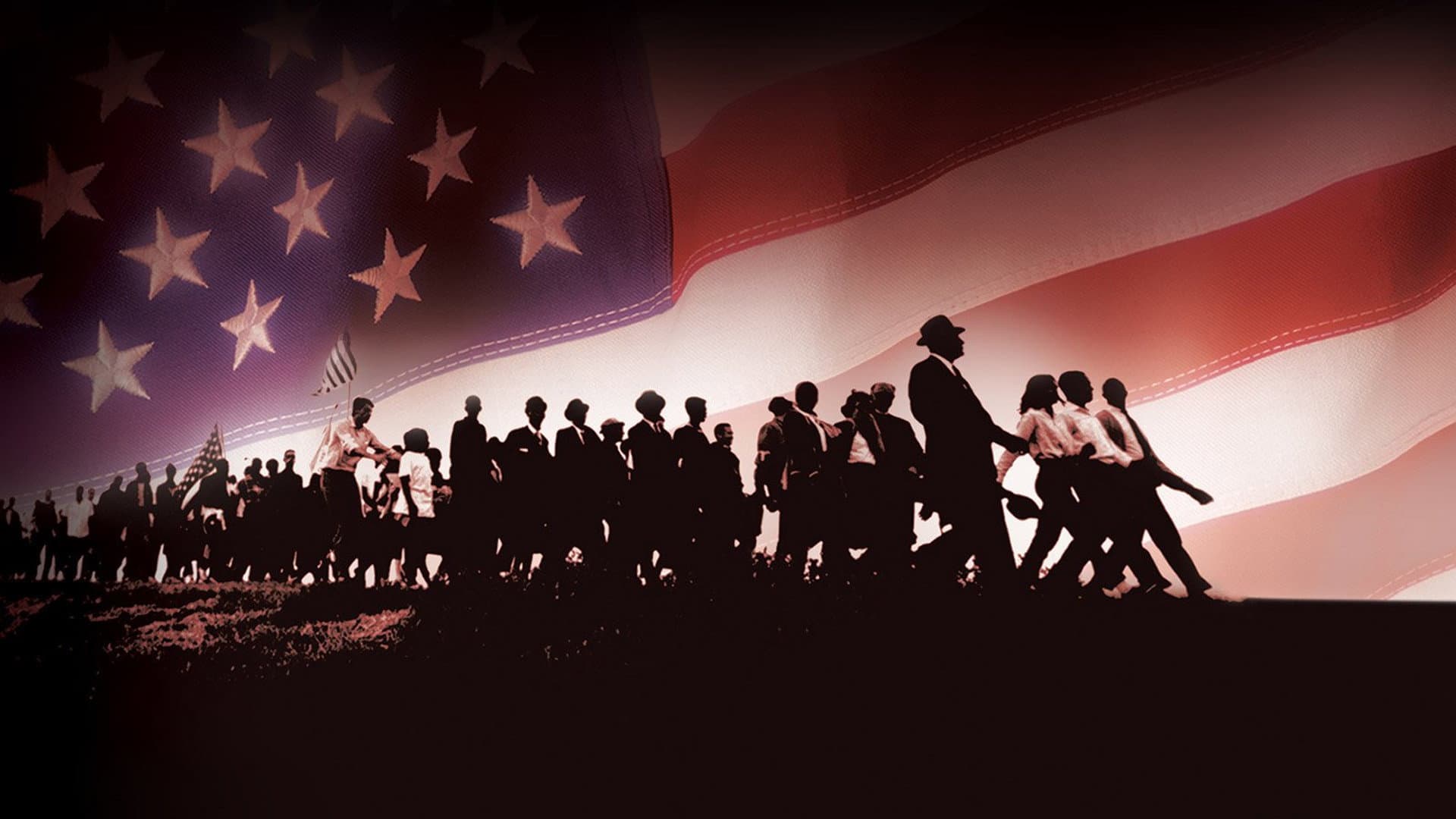

Eyes on the Prize
The definitive story of the Civil Rights era from the point of view of the ordinary men and women whose extraordinary actions launched a movement that changed the fabric of American life, and embodied a struggle whose reverberation continue to be felt today.
Cast

Julian Bond
Self - Narrator (voice)
Seasons
The first season of this Civil Rights documentary chronicles the time period between the United States Supreme Court ruling Brown v. Board of Education in 1954 to the Selma to Montgomery marches of 1965.
E1Awakenings, 1954-1956
Jan 21, 1987
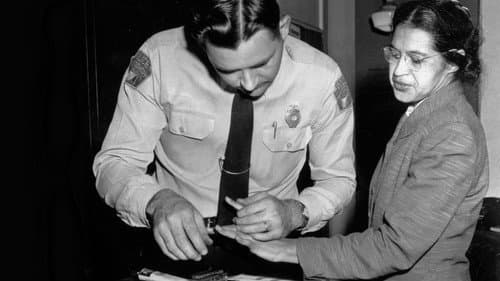
Individual acts of courage inspire black Southerners to fight for their rights: Mose Wright testifies against the white men who murdered young Emmett Till, and Rosa Parks refuses to give up her bus seat to a white man in Montgomery, Alabama.

E2Fighting Back, 1957-1962
Jan 28, 1987
States' rights loyalists and federal authorities collide in the 1957 battle to integrate Little Rock's Central High School, and again in James Meredith's 1962 challenge to segregation at the University of Mississippi. Both times, a Southern governor squares off with a U.S. president, violence erupts -- and integration is carried out.

E3Ain't Scared of Your Jails, 1960-1961
Feb 4, 1987
Black college students take a leadership role in the civil rights movement as lunch counter sit-ins spread across the South. "Freedom Riders" also try to desegregate interstate buses, but they are brutally attacked as they travel.

E4No Easy Walk, 1962-1966
Feb 11, 1987
The civil rights movement discovers the power of mass demonstrations as the Rev. Martin Luther King, Jr. emerges as its most visible leader. Some demonstrations succeed; others fail. But the triumphant March on Washington, D.C., under King's leadership, shows a mounting national support for civil rights. President John F. Kennedy proposes the Civil Rights Act.

E5Mississippi, Is This America, 1962-1964
Feb 18, 1987
Mississippi's grass-roots civil rights movement becomes an American concern when college students travel south to help register black voters and three activists are murdered. The Mississippi Freedom Democratic Party challenges the regular Mississippi delegation at the Democratic Convention in Atlantic City.

E6Bridge to Freedom, 1965
Feb 25, 1987
A decade of lessons is applied in the climactic and bloody march from Selma to Montgomery, Alabama. A major victory is won when the federal Voting Rights Bill passes, but civil rights leaders know they have new challenges ahead.
The second season of this Civil Rights documentary chronicles the time period between the national emergence of Malcolm X during 1964 to the 1983 election of Harold Washington as the first African-American mayor of Chicago.

E1The Time Has Come, 1964-1965
Jan 15, 1990
After a decade-long cry for justice, a new sound is heard in the civil rights movement: the insistent call for power. Malcolm X takes an eloquent nationalism to urban streets as a younger generation of black leaders listens. In the South, Stokely Carmichael and the Student Nonviolent Coordinating Committee (SNCC) move from "Freedom Now!" to "Black Power!" as the fabric of the traditional movement changes.
E2Two Societies, 1965-1968
Jan 20, 1990
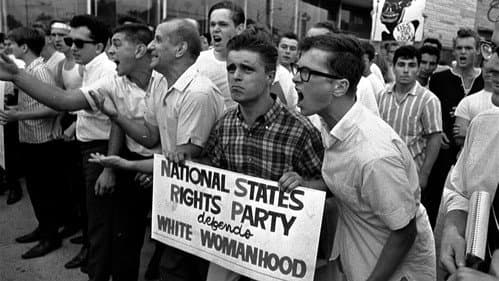
Martin Luther King, Jr. and the Southern Christian Leadership Conference (SCLC) come north to help Chicago's civil rights leaders in their nonviolent struggle against segregated housing. Their efforts pit them against Chicago's powerful mayor, Richard Daley. When a series of marches through all-white neighborhoods draws violence, King and Daley negotiate with mixed results. In Detroit, a police raid in a black neighborhood sparks an urban uprising that lasts five days, leaving 43 people dead. The Kerner Commission finds that America is becoming "two societies, one black, one white, separate and unequal." President Lyndon Johnson, who appointed the commission, ignores the report.

E3Power! 1967-1968
Jan 29, 1990
The call for Black Power takes various forms across communities in black America. In Cleveland, Carl Stokes wins election as the first black mayor of a major American city. The Black Panther Party, armed with law books, breakfast programs, and guns, is born in Oakland. Substandard teaching practices prompt parents to gain educational control of a Brooklyn school district but then lead them to a showdown with New York City's teachers' union.

E4The Promised Land, 1967-1968
Feb 5, 1990
Martin Luther King stakes out new ground for himself and the rapidly fragmenting civil rights movement. One year before his death, he publicly opposes the war in Vietnam. His Southern Christian Leadership Conference (SCLC) embarks on an ambitious Poor People's Campaign. In the midst of political organizing, King detours to support striking sanitation workers in Memphis, where he is assassinated. King's death and the failure of his final campaign mark the end of a major stream of the movement.

E5Ain't Gonna Shuffle No More, 1964-1972
Feb 12, 1990
A call to pride and a renewed push for unity galvanize black America. World heavyweight champion Cassius Clay challenges America to accept him as Muhammad Ali, a minister of Islam who refuses to fight in Vietnam. Students at Howard University in Washington, D.C., fight to bring the growing black consciousness movement and their African heritage inside the walls of this prominent black institution. Black elected officials and community activists organize the National Black Political Convention in Gary, Indiana, in an attempt to create a unified black response to growing repression against the movement.

E6A Nation of Law?, 1967-1968
Feb 19, 1990
Black activism is increasingly met with a sometimes violent and unethical response from local and federal law enforcement agencies. In Chicago, two Black Panther Party leaders are killed in a pre-dawn raid by police acting on information supplied by an FBI informant. In the wake of President Nixon's call to "law and order," stepped-up arrests push the already poor conditions at New York's Attica State Prison to the limit. A five-day inmate takeover calling the public's attention to the conditions leaves 43 men dead: four killed by inmates, 39 by police.

E7The Keys to the Kingdom, 1974-1980
Feb 26, 1990
In the 1970s, antidiscrimination legal rights gained in past decades by the civil rights movement are put to the test. In Boston, some whites violently resist a federal court school desegregation order. Atlanta's first black mayor, Maynard Jackson, proves that affirmative action can work, but the Bakke Supreme Court case challenges that policy.
E8Back to the Movement, 1979-mid 1980s
Mar 5, 1990
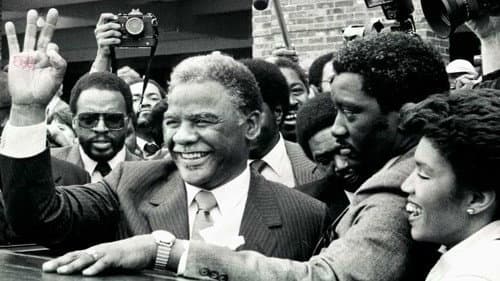
Power and powerlessness. Miami's black community -- pummeled by urban renewal, a lack of jobs, and police harassment -- explodes in rioting. But in Chicago, an unprecedented grassroots movement triumphs. Frustrated by decades of unfulfilled promises made by the city's Democratic political machine, reformers install Harold Washington as Chicago's first black mayor.
Videos
Storyline
The definitive story of the Civil Rights era from the point of view of the ordinary men and women whose extraordinary actions launched a movement that changed the fabric of American life, and embodied a struggle whose reverberation continue to be felt today.
Recommended

Leaving Neverland
2019

Top Gear
1978

American Experience
1988

The Movies
2019

Superpowered: The DC Story
2023

American Masters
1986

The Civil War
1990

Rafa
2026

Quarterback
2023

Legacy: The True Story of the LA Lakers
2022

The American Revolution
2025

The War
2007
More Like This

Black America Since MLK: And Still I Rise
2016

Jackie Robinson
2016

The Vietnam War
2017

The Last American Gay Bar
2024

Free Nelson Mandela
2026

Indian Summer: The Oka Crisis
2006
I'll Fly Away
1991

When We Rise
2017
True Women
1997

Say Nothing
2024

Whistleblowers: The Untold Stories
2011

Monochrome: Black, White & Blue
2017