

Great Planes
Cast
Paul Moga
Presenter - Himself
Seasons
E1Douglas Skyraider
Oct 29, 2008
The Douglas Skyraider was a propeller-driven bomber and ground attack weapons system, unglamorous but almost perfectly suited to its various roles. In the closing years of World War II it was realized that fighter airplanes had become so advanced, so speedy, that the great weight of the rear gunner, his turret, and his equipment in torpedo and dive bombers were redundant. Douglas was given a contract to construct a single-engined, single seat bomber and attack airplane for use aboard Navy carriers, and they came up with a winner. It was a big airplane with a radial engine, and it could carry a huge load of ordinance -- a better bomb load than a B-17, or a nuclear weapon. First flown in 1945, it was finally retired after service in Korea and Vietnam, sometime in the 1960s.
E2P-40 Warhawk
Nov 5, 2008
E3P51 Mustang
Nov 12, 2008
E4North American B-25 Mitchell
Nov 19, 2008
The B-25, nicknamed "the sweetheart of the forces," was one of the stars of World War II. Known for its adaptability, this bomber was flown by the Air Force, the Navy and the Marines.
E5F-15 Eagle
Nov 26, 2008
E6F-16 Fighting Falcon
Jan 4, 2009
E7F/A 18 Hornet
Jan 21, 2009
E8PBY Catalina
Jan 29, 2009
The wings were of taut canvas covered with dope. The wings were thick to provide lift and carried thousands of gallons of fuel, providing long range and flying time, exactly the requirement for a reconnaissance aircraft. Range could be increased to 4,000 miles by cutting one engine. The metal fuselage had to be unusually strong because every marine take off and landing bounces the ship around and stresses all the joints. The result was a sleek hull that was an airplane on top and a boat on the bottom. The initial Navy order was for 60, in 1936, and they were called PB-Ys -- "PB" for patrol boat, "Y" for Consolidated. When war broke out the British bought them and called them the Catalina. The name stuck. They were used in every theater of the war and in every imaginable role. One even managed to launch torpedoes at the Japanese fleet during the Battle of Midway.
E9Republic F84
Feb 5, 2009
The early models of the F-84 looked rather neat, like a tube or a cigar humidor, with an opening in the nose and another in the tail, as if the jet engine had been supplied and the airplane built around it. It had nothing particularly new but was a summation of what at the time was known about jets and about aeronautical engineering. At the outbreak of war in Korea, the USAF found itself with three different airplanes. The F-86 was obviously the fighter of the group. The F-84 went through several models and was adapted for the ground attack role. It carried a good deal of ordinance and could be fitted with a nuclear bomb. In addition to the usual six .50 caliber machine guns favored by the USAF at the time, it could carry a number of 5-inch rockets, useful against tanks. The low speed and lack of maneuverability were no handicap in attacking ground targets.
E10F-104 Starfighter
Feb 19, 2009
Lockheed's F-104 Starfighter first appeared in the mid-50s. Its appearance is beguiling. It looks like an unusually long, shiny silver bullet to which someone has attached two small stubby wings and a delicate empennage. It looks fast -- and it was. It was intended to be a replacement for the fleet of aging F-86s and F-84s and in fact it was an improvement in many respects over the older airplanes, especially in speed. It was a relatively unsophisticated lightweight airplane and the USAF wasn't very enthusiastic about it. It had little range, its stubby wings couldn't carry any ordinance, and it lacked the radar that would have made it operable in poor weather. But NATO too was looking for a standard interceptor for Europe, an environment for which the Starfighter wasn't well suited.
E1F100 Super Sabre
Jul 10, 2009
E2F4 Phantom
Jul 17, 2009
E3SR71 Blackbird
Jul 24, 2009
E4A7 Corsair
Jul 31, 2009
The F4U was arguably the finest propeller-driven fighter on the Allied side. It was the first single-engine American fighter to break 400 miles per hour in level flight. It was first driven by a Pratt & Whitney Double Wasp engine of 1800 horsepower, about as powerful as they could get at the time. Vought simply built the smallest airframe they could around the huge radial engine. To maximize performance, a 13-foot Hamilton Standard Propeller was used. It was originally designed to be operated from an aircraft carrier but the US Navy decided it was unsuitable for precise landings and take offs, so they handed it over to the Marines for land-based use. It proved highly successful both as a fighter and in the ground attack role. It continued in use as an attack airplane through the Korean war, and the last Corsair was produced in 1953.
E5A26 Invader
Aug 7, 2009
The A-26 Invader was introduced in October, 1944, and was involved in every conflict that followed until finally retired in 1969. There was no other airplane quite like it. It was a twin-engine medium bomber or ground attack aircraft that excelled at both tasks. The famous B-17 heavy bomber could carry about 8,000 pounds of bombs and could make a top speed of about 270 miles per hour. The A-26 carried half that load at 350 miles per hour and, with emergency boosters, up to more than 370. The ground attack version carried eight .50 caliber machine guns in the nose. The top turret carried two more and could be aimed ahead to supplement the eight fixed guns. With cheek packs added, the total came to eighteen heavy machine guns.
E6P39 Aircobra
Aug 14, 2009
E7Chinook
Aug 28, 2009
E8Bell UH-1 Huey
Aug 28, 2009
E9B52 Stratofortress
Oct 29, 2009
Storyline
Recommended

Baseball
1994

Doctor Who Confidential
2005

Leaving Neverland
2019

The Reluctant Traveller with Eugene Levy
2023

Top Gear
1978

Eli Roth's History of Horror
2018

American Masters
1986

Biography
1987

History 101
2020

Gadget Man
2012

American Experience
1988

Horizon
1964
More Like This

Top Guns: The Next Generation
2025

War Heroes of the Skies
2013

Airline
2004
AFP: American Fighter Pilot
2002

Maui Chopper
2008

The Flying Boats
1980

The Century of Flight
1997

Planespotting Live
2019

The Bomber: Terror of WWII
2022
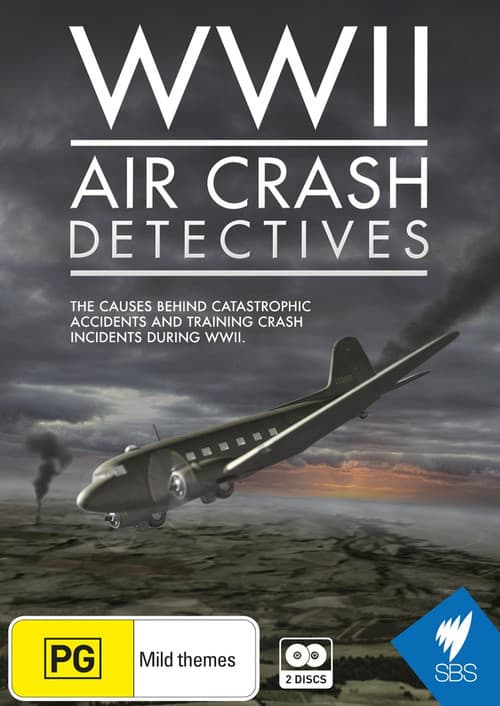
WWII Air Crash Detectives
2014

Battle Stations
2000

First Flights with Neil Armstrong
1991