
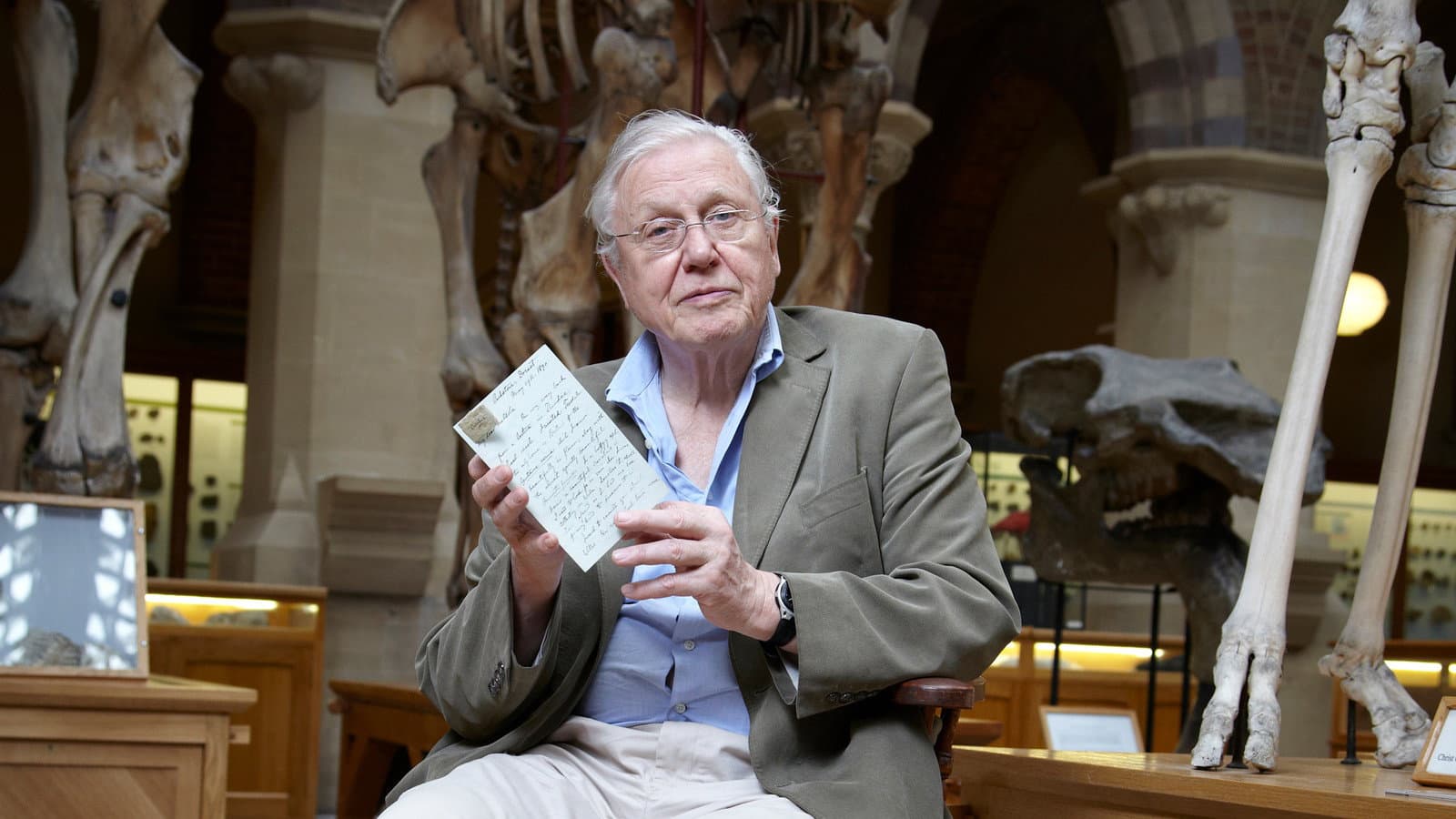

David Attenborough's Natural Curiosities
Sir David shines the spotlight on some of nature’s evolutionary anomalies and reveals how these curious animals continue to baffle and fascinate.
Cast

David Attenborough
Self - Presenter
Seasons

E1Stretched to the Limit
Jan 29, 2013
Some animals appear to have taken Nature’s gifts and stretched them to extreme limits. With these two natural curiosities one creature, the giraffe, has ended up with a super-stretched neck, the other, the chameleon, a super stretchy tongue. In both cases nature has found a way to turn the ordinary into the extraordinary.

E2A Curious Hoax?
Feb 5, 2013
David discovers the curiosities that have led to accusations of forgery but have ultimately helped us rethink evolution. When early explorers brought the first specimen of a duck-billed platypus back to England in 1799, it was thought so bizarre it was deemed a hoax, while the midwife toad became the centre of a raging scientific storm in the 1920s that led to accusations of fakery.

E3Young Wrinklies
Feb 12, 2013
David encounters two examples where Nature has tinkered with the aging process to alarmingly different effect – the first grows old while trapped in a young body while the second looks old from birth but might hold the key to a long life.

E4A Curious Twist
Feb 19, 2013
The single spiral tusk of the narwhal inspiration for tales of unicorns and the myriad variations on the twist of the snail shell have delighted and fascinated naturalists and artists since the dawn of civilization.

E5Seeing the Pattern
Feb 26, 2013
Zebra stripes vary subtly between the different species but there is one group of animals that has evolved colourful patterns of seemingly infinite variety, the butterflies. In this episode David looks at two examples of animal patterns that have bedazzled and baffled science for a long time, and uses modern tools to unlock their secrets.

E1Virgin Birth
Feb 18, 2014
Sir David Attenborough uses this episode to investigate two animals who are capable of true virgin birth - the production of offspring without the need for sex.

E2Armoured Animals
Feb 18, 2014
This episode explores the story of two animals that hide behind seemingly impregnable coat of arms. Can Sir David Attenborough get in behind their armour and reveal their mysteries?

E3Life in the Dark
Feb 25, 2014
Sir David Attenborough continues to shine the spotlight on nature's most amazing animals this time looking at the vision in squid and owls. Perhaps not a classic pairing, both owls and squid have incredible adaptations for being able to navigate at night.
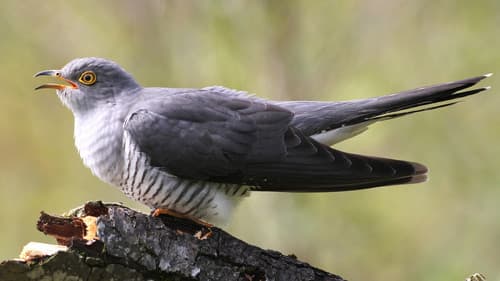
E4Curious Imposters
Feb 25, 2014
Here we discover that some animals are able to trick others into believing they are something that they are not. The art of deception is a powerful attribute for some.

E5Bad Reputations
Mar 4, 2014
After initially gaining frightening reputations, it's now known that gorillas and bats are a lot gentler and considerate than their early reputations suggest.
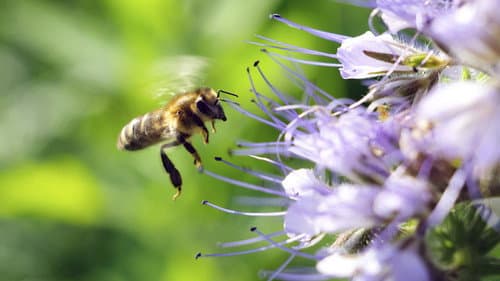
E6Shocking Senses
Mar 4, 2014
Plants and animals have some curious super senses that enable them to see, hear and feel things that are quite invisible to us.

E7Life on Ice
Mar 11, 2014
In this episode we explore the remarkable adaptations of two creatures that have evolved to survive the most challenging of conditions and seem to defy the laws of nature.

E8Spinners and Weavers
Mar 11, 2014
We'll find out how nature is incredibly inventive and has produced two unique mechanisms of natural construction that have fascinated scientists for centuries; weaving in birds and silk.
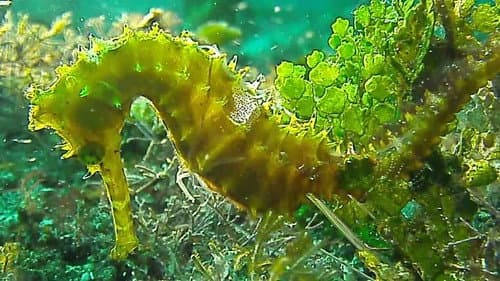
E9Strange Parents
Mar 18, 2014
"Strange Parents" asks how we usually recognise animals as either male or female and how each sex normally plays a particular role in their own life cycle. However both hyenas and seahorses completely break the gender rules.

E10Magical Appearances
Mar 18, 2014
"Magical Appearances" explores how swallows magically appear each spring and asks how did complex and beautiful insects like butterflies suddenly arrive in the summer. The discovery of the swallow’s epic migration and the revelation that butterflies could metamorphose into totally different looking adults were scientific stories both cloaked in mystery and controversy.

E1Impossible Feats
Feb 2, 2015
Fleas are supposed to be able to jump the equivalent of a human leaping over St. Paul’s Cathedral and cheetahs purportedly can clock speeds of 70 miles per hour. But are these claims really true? The discovery of the world's most elastic natural protein in insects and the development of a hi-tech tracking collar have helped reveal the truth. So can these creatures really achieve what should be physically impossible?

E2Curious Minds
Feb 9, 2015
Orangutans can use tools but such skills remained undiscovered for centuries. They were considered as just clever mimics until discovery in remote Sumatran swamps revealed their true potential. Clever crows also make surprisingly sophisticated tools. How have the curious minds of these two animals helped them become so inventive?

E3Expandable Bodies
Feb 16, 2015
The bodies of some animals stretch and shrink in extraordinary ways. The anaconda can swallow prey twice its own body size - and then wait for over a year until their next meal. The camel’s curious hump can almost double in weight giving it the energy to travel huge distances across deserts. What is the secret behind these expandable bodies?

E4Curious Feeders
Feb 23, 2015
The blue whale and the flamingo both have bodies determined by their diet. Blue whales grow enormous by feeding on tiny shrimp-like creatures, while flamingos spend their lives eating with their heads upside down. Both are oddities in their own groups and yet both are curiously similar.

E5Curious Cures
Mar 2, 2015
Humans are not alone in using medicines against injuries and infection. Some animals protect themselves with natural remedies in the most extraordinary ways. Hippos produce a blood-red “sweat” that acts as a sunblock and helps fight infections, while capuchin monkeys rub themselves with insect-repellent leaves to protect against insect bites.

E6Remarkable Regeneration
Mar 9, 2015
Salamanders can regenerate entire legs and tails to replace ones they have lost, while deer shed their massive antlers and re-grow them from a few remaining cells each year. How do these creatures regenerate entire body parts and why is it not possible for all animals to do the same?
E1Animal Frankensteins
Jun 11, 2017
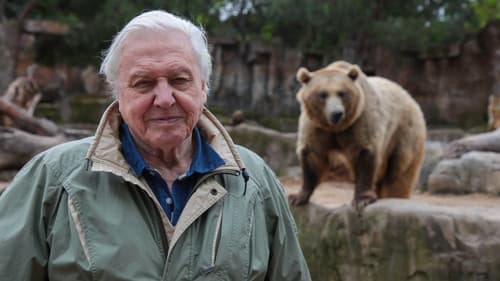
Hybrids can be bizarre and they can be deadly. We look at two hybrid animals that owe their existence to human interference – the pizzly bear (a cross between a polar bear and grizzly), which has come into being because of global warming, and the killer bee brought into existence because of the transfer of African bees to South America.
E2Finding the Way
Jun 11, 2017
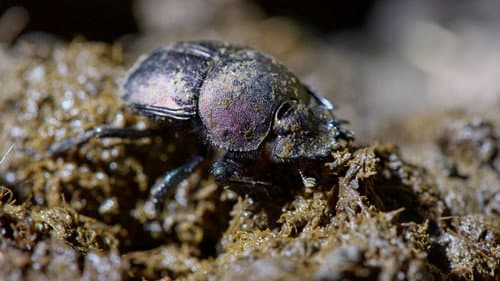
Some animals have an extraordinary ability to find their way. The dung beetle, an insect revered by ancient Egyptians, uses the sun, the moon and even the Milky Way to move its prized ball of dung in the right direction. Pigeons are often considered feeble birdbrains, but they have incredible memories that can recall several complex travel routes with amazing accuracy and they even use manmade roads and hedgerows to find the quickest way home.
E3Extreme Babies
Jun 18, 2017
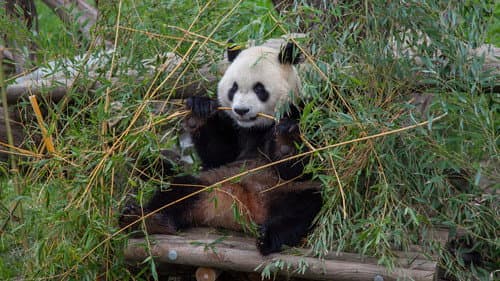
The giant panda gives birth to the smallest baby of any mammal and has to care for and protect it for many months. The kiwi lays one of the largest eggs in the bird world, which produces a very well developed chick. Why don’t pandas give birth to more developed, robust young and why do kiwis produce a single egg that is a quarter of its body mass and almost too big to lay?

E4Curious Counters
Jun 18, 2017
Can animals count? This is a question that has intrigued and fooled investigators for a long time. Just over a hundred years ago, a German horse called Hans was declared a mathematical genius but all was not as it seemed. And strangely, some bamboos around the world flower exactly at the same no matter where they are – are they counting down the years?

E5Incredible Shells
Jun 25, 2017
David Attenborough investigates two shells that have proved to be winners in evolution: the bird’s shell and the hard shell of the tortoise. The ostrich egg is so strong it’s possible for a person to stand on it without it breaking – how does the chick break out of this fortress? The evolution of the tortoise shell was for a long time a mystery and this bony box offers a lot more than just protection.

E6Ferocious Fighters
Jun 25, 2017
The Siamese Fighting Fish is so aggressive it will fight its own reflection until it is exhausted. Recent research shows that the fighting behaviour varies and depends on the personality of the fish! Male kangaroos were once pitted against humans in the boxing ring – the most impressive male kangaroos are solid blocks of muscle with a kick that can kill. Why do they fight and what skills must a winner have?
Storyline
Sir David shines the spotlight on some of nature’s evolutionary anomalies and reveals how these curious animals continue to baffle and fascinate.
Recommended

Natural World
1983

Nature
1982

Seven Worlds, One Planet
2019

Life
2009

Earth at Night in Colour
2020

Life on Our Planet
2023

The Life of Mammals
2002

Planet Earth III
2023
Prehistoric Planet
2022

The Secret Lives of Animals
2024

Tiny World
2020

Great Migrations
2010
More Like This

Akvariet
2007

Cities: Nature's New Wild
2018

Música à Beira do Mundo
2025

Planet Carnivore
2007

National Parks: USA
2024

IMAX: Extreme Nature Collection
2013
Really Wild Animals
1994

Ninja of the Rockies
2022

Life in Cold Blood
2008

Nature's Microworlds
2012

Walking with Beasts
2001

The Magic of the Big Blue. Seven Continents
2013