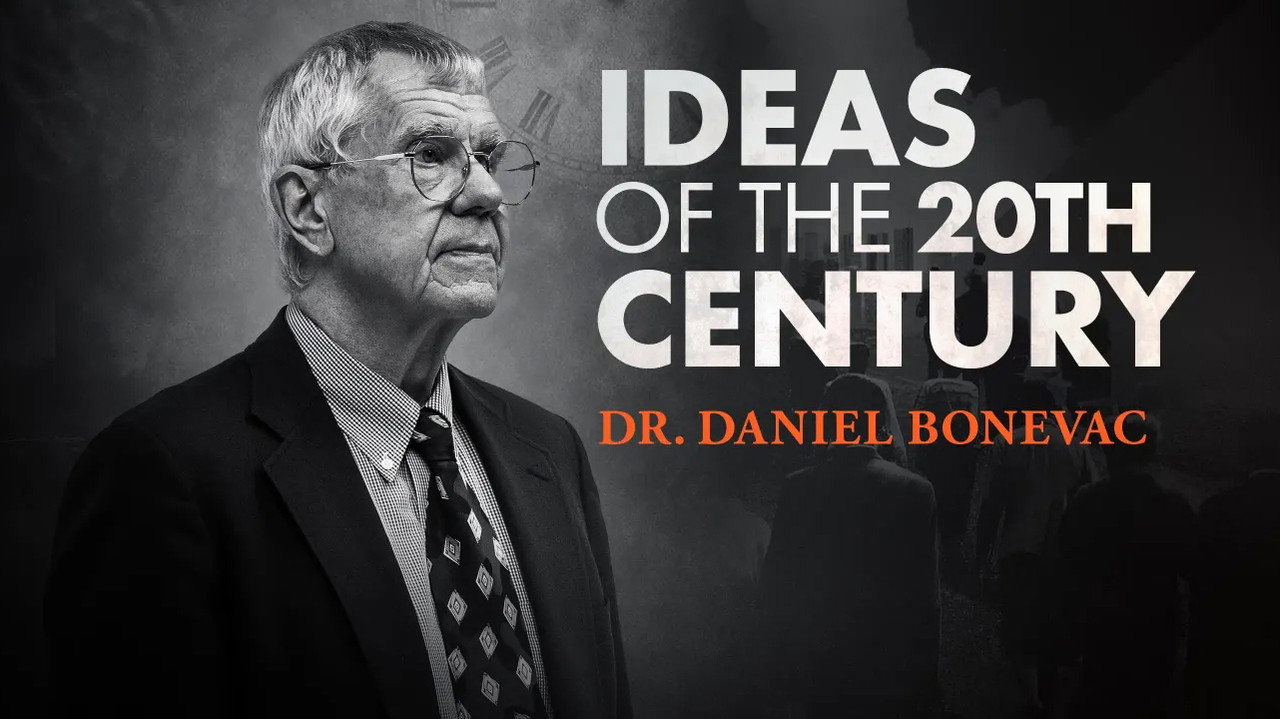
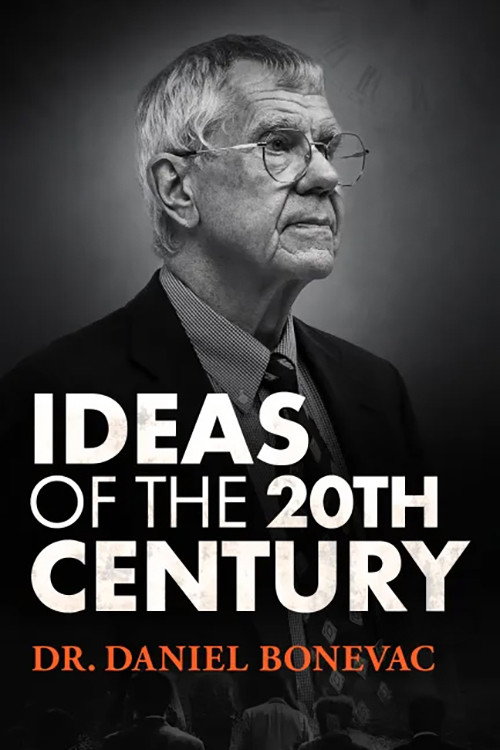

Ideas of the 20th Century
In Ideas of the 20th Century, Dr. Daniel Bonevac examines the major intellectual movements that shaped modern Western thought. Beginning with the Scientific, Agricultural, and Industrial Revolutions, the course explores how traditional beliefs came under pressure, creating tensions between human freedom and scientific determinism and contributing to cultural and political upheavals. Through the ideas of thinkers such as Nietzsche, Marx, Freud, and the existentialists, as well as debates over totalitarianism, liberty, language, truth, and justice, the course traces the search for meaning in the modern world. By connecting philosophy, politics, and culture, it reveals how the central ideas of the 20th century continue to shape contemporary society and the challenges facing Western civilization today.
Cast

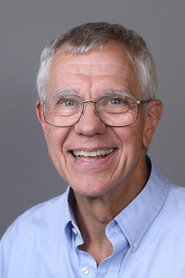
Dr. Daniel Bonevac
Host
Seasons
In Ideas of the 20th Century Part 1, an eight-hour course, Dr. Daniel Bonevac explores how the Scientific, Agricultural, and Industrial Revolutions created a lasting tension between human agency and scientific determinism. We examine how this crisis of belief contributed to the erosion of traditional values and upheavals like World War I and the Russian Revolution. By examining key thinkers including Nietzsche, Marx, Freud, and modernist writers like Eliot and Fitzgerald, the course traces the search for meaning in a fractured world and shows how this struggle still shapes modern culture and politics.
E1A Mighty Maze
Mar 19, 2026
In our introductory lecture, Dr. Bonevac reveals the interdisciplinary roots of 20th-century thought, tracing how the Scientific, Agricultural, and Industrial Revolutions reshaped society and human life. He shows that as progress brought prosperity, it also sparked a lasting philosophical tension between the “manifest image” of free, rational agency and the “scientific image” of a physically-governed world. We see how this unresolved clash—between reason, morality, and determinism—remains a defining challenge of modernity.
E2The Abdication of Belief
Mar 19, 2026
In lecture two, we encounter the crisis of belief in the 20th century, examining how tensions between scientific and manifest worldviews led to abandoning traditional values. We discuss Hume's is-ought problem and responses from Wittgenstein's transcendental ethics, Nietzsche's relativism and "death of God," to Dostoevsky's Grand Inquisitor. The lecture concludes by examining constrained versus unconstrained visions, highlighting the dangers of abandoning absolute values and the slide toward narcissism without external moral anchors.
E3Wisdom of the Age
Mar 19, 2026
In lecture three, we analyze how early 20th-century intellectual movements like Shaw's cynicism about moral values and Italian Futurism's violent rejection of the past helped create conditions for World War I. We explore Shaw's dismissal of traditional ethics and embrace of Stalin's violence, alongside the Futurists' glorification of war and destruction as progress. The discussion concludes with WWI's catastrophic toll and its shattering of civilization's faith in progress, creating a generation that lost innocence and trust in institutions.
E4Disturb the Universe
Mar 19, 2026
In lecture four, we examine the rise of conservatism and progressivism in the 1910s and 1920s and their lasting impact on American politics. Focusing on Woodrow Wilson’s top-down, state-centered vision of freedom, we contrast it with the laissez-faire policies of Harding and Coolidge that fueled the economic boom and cultural dynamism of the Roaring Twenties. Dr. Bonevac concludes by highlighting both the era’s remarkable achievements and a growing intellectual elite increasingly at odds with the society it was meant to serve.
E5Downward to Darkness
Mar 19, 2026
In lecture five, we study the Russian Revolution's roots in Marxist philosophy, examining how Marx's materialism reduced ethics to tactics serving class interests and identified human essence with production. We trace Lenin's radical departure from Marx's economic determinism, implementing totalitarian rule through systematic terror that killed hundreds of thousands. The discussion highlights fundamental problems with communist theory including problems of motivation, the emergence of new ruling elites, and economic collapse that forced Lenin to partially restore private property before his death.
E6The Ruins of Meaning
Mar 19, 2026
In lecture six, we explore the profound impact of World War I on Western intellectual thought through the poetry of W. B. Yeats and T. S. Eliot, examining how both poets grappled with the collapse of traditional values and the search for meaning in a fractured civilization. We analyze Yeats's cyclical view of history in "The Second Coming" and his quest for spiritual permanence in "Sailing to Byzantium," alongside Eliot's fragmented vision in "The Waste Land," which depicts a spiritually barren modern world. The lecture concludes by highlighting how both poets, despite their different approaches, ultimately argue that life requires connection to something eternal or larger than oneself to have meaning.
E7As an Endless Dream
Mar 19, 2026
In lecture seven, we explore the contrasting perspectives of Rudyard Kipling and F. Scott Fitzgerald as voices of the 1920s, examining their different responses to the post-World War I era. We examine Kipling's "ethics of civilization," emphasizing traditional wisdom, social institutions, and long-term survival over abstract ideals, illustrated through poems like "If" and "The Gods of the Copybook Headings." We then analyze Fitzgerald's "This Side of Paradise," depicting the lost generation's moral drift after WWI, torn between external values and internal meaning, ultimately finding only self-knowledge amid disillusionment.
E8Unfathomable Reservoirs of the Absurd
Mar 19, 2026
In our eighth and final lecture, we investigate how World War I trauma created "unfathomable reservoirs of the absurd" that veterans couldn't express, leading to Freud's psychoanalytic theories gaining cultural prominence. We explore Freud's dream interpretation, his id-ego-superego model, and his controversial death drive theory. We then analyze how Freudian ideas influenced cultural movements, particularly Luigi Pirandello's theatrical exploration of multiple, contradictory selves, and the Surrealist movement's attempt to access and express this hidden psychological truth through art that suspends rational consciousness.
In Ideas of the 20th Century: Part 2, Dr. Bonevac continues our analysis of the intellectual currents shaping 20th-century Western thought. Beginning with thinkers who warned about threats to civilization, we examine the rise of totalitarianism in Europe. We then turn to existentialism and its response to meaning and absurdity, critiques grounded in universal moral truth, and accounts of how language connects mind to reality. We consider defenses of freedom, warnings about linguistic manipulation, and postmodern challenges to objective truth. Finally, we study the revival of moral normativity, theories of justice, and the intellectual movements behind the collapse of Soviet communism. Our course concludes by reflecting on the enduring challenges to Western values and the importance of moral truth in sustaining civilization.
E1Dust and Dreams
May 29, 2026
In our introductory lecture, we learn about early 20th-century thinkers who warned against intellectual and cultural trends that threatened Western civilization—Miguel de Unamuno, Julien Benda, and José Ortega y Gasset. Unamuno rejected reductive views of humanity, emphasizing emotion, individuality, and treating people as ends in themselves. Benda criticized intellectuals who abandoned transcendent ideals for political fanaticism, while Ortega’s perspectivism and critique of mass media warned of conformity, “mass man,” and the erosion of civilization—developments that foreshadowed totalitarianism.
E2Disintegrating This World
May 29, 2026
In lecture two, we examine the rise of totalitarianism in 20th-century Europe through fascist and communist movements in Italy, Russia, and Germany. First, we study Mussolini’s fascism as a nationalist system built on state supremacy, propaganda, and the subordination of individual rights. Next, we analyze Stalin’s Soviet Union, focusing on collectivization, political purges, and mass repression. Finally, we learn about Hitler’s rise in Germany, showing how economic crisis and political instability enabled the Nazi regime to establish the most destructive form of totalitarian rule. We conclude by examining how Western intellectuals defended these brutal regimes despite evidence of their atrocities.
E3Constantly Risking Absurdity
May 29, 2026
In lecture three, we explore existentialism, which emerged prominently during and after World War II, focusing on its themes of absurdity and meaning in human life. Dr. Bonevac covers key thinkers like Jean-Paul Sartre, Albert Camus, and Simone de Beauvoir, who argue that existence precedes essence and that individuals must create their own meaning in an inherently meaningless world. The discussion examines critical responses from Saul Bellow and C.S. Lewis, who argue that existentialism artificially isolates individuals from universal moral truths and spiritual dimensions that are inherently known to all humans, suggesting that meaning and purpose are not self-created but discovered through our shared humanity and objective moral order.
E4The Prospects of Freedom
May 29, 2026
In lecture four, Dr. Bonevac discusses freedom through Friedrich Hayek’s economic philosophy and George Orwell’s warnings about totalitarianism. Hayek argues that socialism, despite its appeal as a rational pursuit of the common good, ultimately undermines individual liberty, concentrates power, and fails because centralized planning cannot manage the complexity of society. Orwell complements this critique by showing how totalitarian systems manipulate language and reality, eroding truth, integrity, and human dignity. The lecture concludes by considering democratic socialism and the dangers of political language manipulation.
E5A Renaissance of Wonder
May 29, 2026
In lecture five, we study how mind and language connect to reality, asking whether human beings have direct access to truth or are trapped within conceptual frameworks that distort the world. Through Iris Murdoch’s work, we explore the concern that language and thought act as “nets” that filter and potentially falsify reality, casting doubt on objective knowledge. The lecture then turns to postmodernism, particularly Jean-François Lyotard’s rejection of grand narratives and universal truth in favor of multiple local forms of knowledge. We consider how these metaphysical questions connect to moral imperatives—ultimately arguing that the pursuit of truth is itself an ethical commitment.
E6Something to Say about Reality
May 29, 2026
In lecture six, we analyze how cultural and political upheavals of the 1960s and 70s—including the Vietnam War and Watergate—generated moral confusion and skepticism about connecting mind to reality. We examine how these crises undermined trust in institutions, leadership, and shared moral frameworks. The lecture then turns to Saul Kripke’s theory of names as “rigid designators,” arguing that language can directly connect us to reality rather than merely to concepts. We also examine Joan Didion’s reflections on morality and self-respect, which suggest that beneath cultural disagreement lies a shared moral core grounded in survival, loyalty, responsibility, and love.
E7Murmur of the Absolute
May 29, 2026
In lecture seven, we consider the post-World War II revival of moral normativity, driven by the recognition of real evil and the need for objective moral standards beyond personal preference. We examine two major theories of distributive justice: John Rawls’s “justice as fairness,” grounded in the social contract, original position, and veil of ignorance, and Robert Nozick’s historical theory of justice, which emphasizes legitimate acquisition and individual liberty over patterned distributions. The lecture concludes by considering the tension between fairness and liberty, as well as Rawls’s later concerns about maintaining consensus in increasingly diverse societies.
E8No Other End of the World
May 29, 2026
In our eighth and final lecture, we explore the intellectual and political movements that contributed to the collapse of the Soviet Union through figures such as Aleksandr Solzhenitsyn and Václav Havel, who exposed the lies sustaining communist societies and emphasized the importance of “living in truth.” We examine Solzhenitsyn’s critique of ideology and his experiences in the Gulag system, Havel’s analysis of conformity and “living within the lie,” and the role leaders like Reagan and Thatcher played in challenging Soviet power. Dr. Bonevac concludes by considering Solzhenitsyn's warning that Western civilization's focus on human happiness rather than higher spiritual duties may lead to its own form of moral decay.
Videos
Storyline
In Ideas of the 20th Century, Dr. Daniel Bonevac examines the major intellectual movements that shaped modern Western thought. Beginning with the Scientific, Agricultural, and Industrial Revolutions, the course explores how traditional beliefs came under pressure, creating tensions between human freedom and scientific determinism and contributing to cultural and political upheavals. Through the ideas of thinkers such as Nietzsche, Marx, Freud, and the existentialists, as well as debates over totalitarianism, liberty, language, truth, and justice, the course traces the search for meaning in the modern world. By connecting philosophy, politics, and culture, it reveals how the central ideas of the 20th century continue to shape contemporary society and the challenges facing Western civilization today.
Recommended

WWII in HD
2009

The World at War
1973

World War II in Colour
2009

How to Become a Tyrant
2021

Hitler's Circle of Evil
2018

Grant
2020

The War
2007

Churchill at War
2024

The American Revolution
2025

World War II: From the Frontlines
2023

The Roosevelts: An Intimate History
2014

Greatest Events of World War II in Colour
2019
More Like This

The Booze, Bets and Sex That Built America
2022

Ancient Megastructures
2011

Drinks, Crime and Prohibition
2018
Bratislavské pondelky
2021
Operación Chile: Top Secret
2023

Air Wars
2003

Titanic Sinks Tonight
2025

Private Lives of the Monarchs
2017

Lost Treasures of the Maya
2019

Martin Clunes: Islands Of Britain
2009

Duels of History
2023

The Owl's Legacy
1989