


Icons
Icons was a documentary TV show on G4 that originally focused on significant people, companies, products, history, and milestones in world of video games. It was relaunched in 2006 and focused entirely on pop culture. It was cancelled soon afterwards. On May 10, 2006, it was announced that Icons was relaunching on June 3 with an episode focusing on J.J. Abrams. The show will feature a broader scope on things and people "men 18–34 care about, admire and emulate." Future episodes would focus on Marc Ecko, The Onion, and Family Guy. This change in format had been suspected, due to the recent episodes about George A. Romero, Frank Miller and the history of the King Kong franchise. The classic video game themed episodes continued to air on the network sporadically until 2008, under the new name of Game Makers.
Cast
Jake Steele
Narrator
Seasons

E1Oddworld Inhabitants
May 1, 2002
It's an Oddworld after all. Lorne Lanning and Sherry McKenna, co-founders of Oddworld Inhabitants, have created a video game franchise unlike any other. Fans worldwide have embraced Abe and Munch, the spunky characters who battle the forces of evil with little more than their wits. Lorne, Sherry and other insiders reveal long-held secrets behind some of the games' biggest mysteries and recall the fierce backlash that hit when Abe moved from PlayStation to Xbox.
E2Nolan Bushnell
May 1, 2002
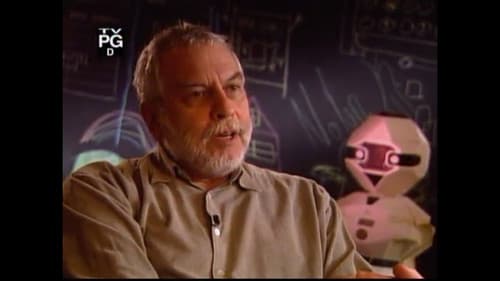
For decades Nolan Bushnell, the originator of Pong and ATARI, has pushed the boundaries with inventions that were sometimes a bit ahead of their time. After amassing a personal fortune by selling ATARI to Warner Communications, Bushnell focused his attention on his rapidly growing Chuck E. Cheese pizza parlor chain and backed a series of innovative inventions, including in-car navigation systems, online shopping and robots. The sometimes-controversial father of the video game industry finally returned to the business with his current company, uWink

E3Pac-Man
May 6, 2002
In 1979, a young Japanese game designer named Toru Iwatani had the desire to create a non-violent arcade game that would appeal to everyone. Originally called "Puck-Man" in Japan, the name was changed to "Pac-Man" by the time the game hit the United States in October 1980. The moment Pac-Man landed on U.S. shores Americans were hit with "Pac-Man Fever." As the fever grew, so did revenues for arcade owners and Pac-Man merchandise retailers. But by the mid 1980s, the arcade industry saw a sharp drop in profits as the home console era began. Atari's home version of Pac-Man for the Atari VCS was one of the best-selling games in Atari's history. Since then, Pac-Man has been released on almost every console imaginable.

E4Lara Croft
May 19, 2002
Dubbed "Indiana Jane" before her 1996 release in the United States, Lara Croft kicked the door open for open for an army of other video game heroines who are tough - and beautiful. The Tomb Raider series, which continues with the upcoming The Angel of Darkness, has legions of male and female fans. On this episode of "Icons" you'll learn the secrets behind the dazzling facade through interviews with Eidos insiders Adrian Smith ("We always thought that the consumers wouldn't believe for one moment we were going to kill Lara off."), Paul Baldwin ("The original game concept was in fact turned down."), and Rob Dyer ("We were more concerned it was going to turn off guys.").

E5Activision
Jun 9, 2002
Founded by four former Atari vets in 1980, Activision dominated the video game industry with smash-hit titles like Pitfall!, River Raid and Kaboom! Rocked by an industry downturn and business missteps, the company floundered until it was purchased by a group headed by Robert Kotick ("Everybody was asking me whether I was mad, you know. Why was I going off and doing this?"). But Kotick proved his doubters wrong and turned the failing game company into one of the world's most successful video game publishers.

E6Miyamoto
Jun 16, 2002
Mr. Miyamoto has created characters such as Donkey Kong, Zelda and, of course, Mario. But with each success, the pressure on Mr. Miyamoto has increased to continually be innovative. He has met the challenge each time and become an integral part of Nintendo's worldwide success. Despite his status as an icon in the gaming world, Mr. Miyamoto remains a team player and leads a surprisngly humble life

E7Everquest
Jul 7, 2002
Fans worldwide have embraced EverQuest since its debut in March of 1999. The enchanting land of Norrath--populated by humans, gnomes, elves and other incredible creatures--is also home to as many as 40,000 players at a given time. On this episode of "Icons," we'll learn the stories behind the conceptualization of EverQuest, how its creators convinced Sony Online Entertainment that Ultima Online was not the ultimate in massive multiplayer online gaming, and what the future holds for this fantasy world.

E8Bioware
Jul 28, 2002
In just seven short years, the video game company Bioware, formed by Ray Muzyka and Greg Zeschuk, has become one of the most respected and fastest-growing companies in the video game business. Best known for their submersive role-playing games, Bioware strives to push the envelope combining the best of technology and epic story-telling.

E9Will Wright
Aug 18, 2002
Before they became a part of the biggest-selling PC video game franchise in the world, Will Wright's Sims games were met with skepticism by the very companies who would later launch them. Learn how Wright's endless curiosity led to one of the most curious series of games, how the term "God Game" was coined, and where the seemingly endless series of Sims games and expansion packs are leading. Industry insiders, fellow game creators and family members help Will Wright tell his compelling story.

E10Women in Gaming
Sep 1, 2002
Women are finding careers behind the scenes as producers, designers and even CEOs of gaming companies. But their rise to the top hasn't always been easy. These eight women--Sherry McKenna, Elaine Hodgson, Caroline Esmurdoc, Patricia Pizer, Amy Farris, Beth Llewelyn, Felice Standifer and Kathy Vrabeck--share their stories, from being asked to serve coffee to sharing a restroom. And more than ever, women are going online. The popularity of massively multiplayer online games like EverQuest are attracting more women gamers. As the gaming industry grows, so do opportunities for women.

E11Insomniac Games
Sep 22, 2002
Find out how two Princeton graduates, Ted Price and Alex Hastings, created a budding gaming dynasty with Insomniac Games. Get the history on how Insomniac got off the ground, despite a less than stellar start with their PlayStation first-person shooter, Disruptor. You'll also find out why Spyro is purple, and we've got a special sneak look at their latest hit in the making, Rachet & Clank.

E12Sid Meier
Oct 6, 2002
Sid Meier launched his first game company, Microprose, in 1982 on a dare from friend Bill Stealy. Over the next decade, Meier and Stealy created flight simulator games and developed a solid reputation for making games that had simple but addictive gameplay. By 1996, Micrprose had grown into a multi-million dollar company, but Meier, always the creative force, grew disenchanted with the business. He left Microprose to start his own small development company, Firaxis Games, which has allowed Meier to create fun and intelligent computer games, enjoyed by millions.

E13Scary Games
Oct 27, 2002
When did video games start scaring you? Do you remember the first scary game you ever played? We take a look back at the scariest of the scary, from their humble start--and fumble--to their ultimate success in the gaming world. Included are looks at The 7th Guest, Alone in the Dark, Resident Evil, and much, much more

E14Richard Garriott
Nov 10, 2002
The land of Britannia; a realm of magic, mystery, intrigue, and adventure. Who created this world? How did it begin? Find out the true story behind Richard Garriott, the man responsible for jumpstarting the PC role-playing game genre, and the creator of the Ultima series.

E15Bruce Shelley
Nov 24, 2002
Very few people can say that they've honed their gamemaking skills alongside a gaming god. But that's exactly what Bruce Shelley did. After getting a start in the industry by helping Sid Meier create games such as Railroad Tycoon and Civilization, he went on to create the critically acclaimed Age of Empires series. We follow his career from his board game making start to Ensemble's latest game, Age of Mythology.
E16John Madden NFL Football
Mar 3, 2005
Presenting the history of the Madden football franchise, from its humble beginnings on the Apple II to the realistic powerhouse that it is today, you'll get all the details on how this series came to be. Featuring interviews with the developers and behind-the-scenes footage from the past.

E17Splinter Cell
Dec 18, 2002
Introducing the first in a series of Icons specials that feature the latest and greatest games, developers, and companies of today. For our premiere episode we'll take an in-depth look at the creation of the critically-acclaimed stealth action game, Tom Clancy's Splinter Cell. Catch a glimpse of how the development team went from the drawing board to the final gold.

E18Lord of the Rings
Dec 23, 2002
When Universal Interactive decided to make a game based on "The Lord of the Rings" trilogy, they realized that it would take a special effort to bring the game to life. This is the story behind the painstaking effort the led to the creation of "The Lord of the Rings: Fellowship of the Ring".

E1Atari
Jan 19, 2003
We kick off our new season with the real story behind the world's first truly great videogame company: Atari. Find out just how wild they got, what happened to bring it all down, and what the future holds for them.

E2Music Music
Feb 2, 2003
We sit down with Tommy Tallarico, George Sanger (AKA "The Fat Man"), Clint Bajakian, Masaya Matsuura, Scott Gershin and other music makers to get their stories and learn about the history of music in gaming.
E3Unreal
Feb 16, 2003
We get the lowdown from Cliffy B and show you the true story behind the creation and rise of the Unreal series. From the first Unreal to Unreal 2, see how one beautiful first-person shooter spawned a legendary franchise.

E4Yu Suzuki
Mar 2, 2003
A founding father of gaming, Yu Suzuki's every step revolutionized the way we play games. Watch as we follow the ups and downs of the Michelangelo of game design, from the success of Virtua Fighter to the struggle to bring Shenmue to life.

E5Intellivision
Mar 23, 2003
We take an in-depth look at the Intellivision. Get the true story behind how they began, the world's first console war, and who won. With interviews from people who were there, we show you what happened to Intellivision and where it is today.
E6The Legend Of Zelda
Mar 27, 2003
Icons brings you the story behind a boy named Link, a princess named Zelda, and one of the most loved gaming series of all time. Join Shigeru Miyamoto, and Eiji Aonuma for a look back at the creation of The Legend of Zelda franchise.

E7Xbox
Apr 10, 2003
How does a console go from an idea to your living room? Join us as we follow the path the Xbox team took. Learn how a failed game led a young designer to become the voice that would push Microsoft into the video game arena, then hear from the team that started the system and find out what they think about it now. This is the story of how a great idea can change the way we play.

E8Arcade
Apr 28, 2003
Icons brings you an in-depth look inside a place we all grew up with. Get the story behind the arcade's glorious past, its downfall, and where it's headed in the future. With interviews from some of the pioneers of the video game industry, join us as we take a look back at the history of the arcade.

E9The History Of E3
May 22, 2003
It's where we see the games for the first time. It's a celebration of gaming and a testing ground for game companies. We take a look behind the spectacle and bring you the history of E3.

E10LucasArts
Jun 5, 2003
From Ball Blazer to Grim Fandango, we give you a tour of the one and only, LucasArts. Find out how they got their start with games like Rescue on Fractalus, and get the story behind some of their key games like X-Wing and Dark Forces.

E11Red Storm
Jun 12, 2003
What happens when Tom Clancy meets up with a former British submarine Commander? Videogame history. Gear up, it's time to learn about how a small game developer in Raleigh North Carolina changed the face of first-person shooters with games like Rainbow Six and Ghost Recon.

E12Warren Spector
Jun 19, 2003
In an industry ripe with derivative sequels Warren Spector's games have consistently given players new ways to play. From his days at Origin working on the Ultima and Wing Commander series, through his time helming the Ion Storm Austin team, Warren has struggled to see his games made the way he and his amazing teams envisioned them.

E13PC Gaming
Jul 10, 2003
Its beginnings were humble, but soon the personal computer would become one of the greatest gaming platforms of all time. Join us as we follow the rise of PC gaming from the early days of text adventures in Ziploc bags to the latest in 3D accelerated first-person shooters.

E14The Crash
Jul 24, 2003
In the early 80's video games were still a young medium, but they were responsible for billions of dollars in sales every year. Predictions were made that video games would surpass films in revenue. But in the blink of an eye, it all went terribly wrong: game companies disappeared left and right, arcades fell into decline, and the end of video games was declared. In this episode of Icons, we'll hear from the people involved to find out what went wrong--and why.

E15Games In The Military
Aug 7, 2003
From Battlezone to Operation Flashpoint, we take a look at gaming in the Military. Find out what happens when a civilian game becomes a military training tool and get a look at how some training tools become games.

E16Naughty Dog
Sep 25, 2003
In 1986 two sixteen year old friends start a company together to make money to buy games. Now, almost twenty years later, people are saving to buy their games. We'll follow the steps that took Naughty Dog from just another upstart company to one of the most respected development companies in the world.
E17Mario Franchise
Aug 21, 2003
We'll follow the Italian pipe-cleaner as he climbs the ladder of success from a bit part to a global celebrity. With over twenty years of gaming experience and six of the top ten best-selling games of all time, this little plumber is a true Icon in every sense of the word.
E18Onimusha
Oct 16, 2003
While Resident Evil was a hit series, Capcom pushed the evelope with Keiji Inafune's Onimusha series. The first game was the first million-unit seller for the PlayStation 2 and set records in both sales and production costs. Get the history behind this spectacular franchise.
E19Mega Man
Nov 20, 2003
It's the story of the little robot that could. Mega Man creator, Keiji Inafune, looks back at the victories and hurdles his team faced with each new game.

E20Yuji Naka
Dec 11, 2003
Yuji Naka began his career at Sega as a teenager. Girl's Garden, F-16 Fighting Falcon and Phantasy Star earned him critical praise and fan appreciation. But it was the introduction of Sonic the Hedgehog in 1991 for the Genesis that solidified his place as one of the most creative forces in the game industry. Sonic competed head-to-head with Nintendo's Mario for nearly a decade until the failure of Sega's last hardware system, the Dreamcast in 2001. Now, Mr. Naka brings his memorable characters to all platforms. In 2002, he was awarded with the prestigious Lifetime Achievement Award by his peers at the 2nd Annual Game Developers Conference.
E21Final Fantasy
Jan 1, 2004
From the first Final Fantasy to X-2 and beyond, get the story behind one of the most successful and longest running franchises in gaming history. With interviews from the likes of Hironobu Sakaguchi, Tetsuya Nomura, and Nobuo Uematsu, find out about Final Fantasy's rise from its humble beginnings to its stratospheric heights.
E22Dungeons and Dragons
Jan 29, 2004
Dungeons and Dragons is a fantasy world that invites players to create their own characters and adventures. By the 1980's, this new world translated seamlessly into video games with the release of games like Ultima and Bard's Tale which borrow heavily from the D&D world. However, the series is not without its criticism; parents and conservative groups denounced the games as "dangerous" to young people, though the intense public scrutiny only helps D&D find a new audience. Today, developers such as Bioware use the complex D&D rule set in their most popular games like Baldur's Gate.
E1Music Games
Feb 12, 2004
Suddenly, everyone thinks they can bust a move. In today's episode we look at the movement of Music Games. Parappa The Rapper started the fad of making a game based on music, and not the other way around. This lead to people eventually dancing not in the streets but in the arcades with Dance Dance Revolution.
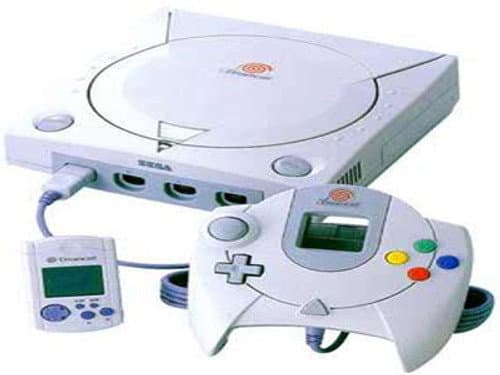
E2Sega Dreamcast
Mar 11, 2004
We explore the rocky history of Sega's last venture into the console market. Hear from Sega insiders Bernard Stolar and Kathy Schoback about the Dreamcast's last days of life and how Sega made the leap from console maker to one of the top software publishers of today.
E3ESRB
Mar 25, 2004
In 1992, games like Mortal Kombat and Night Trap pushed the envelope when it came to advancing graphic and technical capabilities... and catching the attention of the federal government. Washington officials cited these two games as the most offending examples of violence and questionable material available to youngsters at the time via electronic games. As a result, Senators Joe Lieberman and Herb Kohl called on game industry officals to come up with a ratings system for all games. The industry responded with the creation of the Entertainment Software Ratings Board. Since its inception in 1994, the ESRB has been widely praised by Washington - and Senator Lieberman - as the most comprehensive ratings system amongst all entertainment mediums.
E4Peter Molyneux
Apr 8, 2004
Peter Molyneux's first game, Populous, helped create an entire new genre, god games - and it has been copied several times since. With games like Theme Park, Magic Carpet, Dungeon Keeper, BC and the highly anticipated Fable and The Movies, Molyneux continues to push the envelope and create truly immersive experiences for gamers.
E5Tetris
Apr 22, 2004
Was it the challenge? Was it because it was easy? Was it the colorful blocks? Or was it that distinctive music? What ever it was, Alexey Pajitnov's creation has a firm place in the history of gaming, as well as in the history of legal issues. Today's episode takes on the complicated history of Tetris.

E6Electronic Arts
May 6, 2004
Hear how Electronic Arts grew from a small PC publisher to one of the largest game publishers in history. EA has innovated and driven the industry forward since 1982. We sit down with company founder Trip Hawkins, current Executive Vice President Bing Gordon and others to find out how they got to the top.

E7Game Boy
Jun 10, 2004
For 15 years, it has been the dominate console in the videogame hand-held market. Icons follows the creation of the Nintendo Game Boy; from it's formulation from Gunpei Yoko to it's current place as the best-selling hand-held system.

E8Donkey Kong
Jun 24, 2004
It started with a flop. But a young visionary turned failure into success, and created a legendary character. He fought back legal battles and obscurity to become a pillar of gaming history. This is the tale of the one and only Donkey Kong.
E9Nobuo Uematsu
Jul 8, 2004
Learn how Nobuo Uematsu went from playing keyboard in a band to joining Square in 1985. Join us as Nobuo himself tells us about his musical influences in creating the soundtrack for the beloved Final Fantasy series and find out how he has propelled himself into mainstream music today.
E10DOOM
Jul 22, 2004
No longer content with safe simple games like Mario, Zelda and Atari games from yesteryear, gamers have evolved to the next level - it includes more action and fighting demons. Icons takes a look back at the history of the Doom franchise and how it helped evolve the First Person Shooter.
E11Dead or Alive
Aug 5, 2004
Mortal Kombat may have reinvented the fighting game, but it did so by promoting bloody violence. The Dead or Alive series, while still slightly violent, concentrated on better game-play, detailed backstories and had more woman characters to try and add the female gamer demographic. Tomonobu Itagaki gives Icons the history of his DOA games and a hint to what he has planned for the future.
E12SNK
Aug 19, 2004
From it's first game in 1978 Ozma Wars to the soon to be released SVC Chaos: SNK vs. Capcom, SNK has battled against Capcom, lived through a takeover, finally gave in to bankruptcy and returned to publishing titles. Now that SNK has returned, they are giving it's fans sequels of their favorite older games as well as a few other suprises.
E13Mortal Kombat
Sep 2, 2004
No other game can claim that it created such controversy that it lead to the creation of a ratings board. Icons looks at the beginnings and future of the Mortal Kombat series and takes a look at how one game changed the gaming industry forever by adding just a little blood to the genre.
E14Prince of Persia
Sep 30, 2004
Prince of Persia has a long history in the gaming industry, mostly due to it's creator putting it aside on occasion to also work with his other interest in creating films. It revolutionized the adventure game genre by incorporating real world physics and a time limit to games. We look at Persia's beginning on the Apple II and it's eventual return to the gaming industry for Prince of Persia: The Sands of Time. Today, Icons looks at the life of Jordan Mechner, the mind behind the Prince of Persia series.
E15Mark Cuban
Oct 14, 2004
Mark Cuban wasn't given his money, he earned it. "Icons" looks at his humble beginning, to his creating then selling of Broadcast.com which ultimately lead to his purchasing of the Dallas Mavericks NBA team.
E16Metal Gear Solid
Oct 28, 2004
Metal Gear Solid creator Hideo Kojima and character designer Yoji Shinkawa take Icons on an exculsive look at the history of the series that defined the stealth genre.
E17Half-Life
Nov 16, 2004
In celebration of today's release of Half-Life 2, Icons looks at the history of the title. Half-Life changed gaming in that the main character wasn't a soldier or the stereotypical hero, it was a common scientist that just happened to be at the wrong place at the wrong time. This episode looks back at the original game and follows the development of the sequel. And you'll see why Half-Life 2 is "the most important game you'll ever play."
E18Bungie
Dec 9, 2004
Bungie Studios' name is less familiar than the titles it produces. When a game sells 2.5 million copies on it's release date, you would think more people would know the company name. This episode looks at the history of Bungie Studios and it's most successful game series to be released, Halo.
E19Apple II
Jan 6, 2005
Steve Jobs and Steve Wozniak were men with a vision. Icons retraces their steps to find the stories behind the creation of a company and the marketing of a small computer that would take a bite out of the competition.
E20Fighting Games
Jan 20, 2005
It's the genre that created the ESRB. Simple games like Karate Champ and Yie Ar Kung-Fu suddenly gave way to the more detailed and more violent Street Fighter and Mortal Kombat. And despite the controversy, the games continue to sell. Join Icons as we look back at the history of the "Fighting Game."
E1Gran Turismo
Feb 3, 2005
There's no question that racing is one of the oldest and well-loved genres in the game industry, but there is one series out there that truly stands apart from the crowd in the minds of auto enthusiasts and casual gamers alike, and it is Gran Turismo. Named after the European endurance races of legend such as 24 heures du Mans and Targa Florio, Gran Turismo has dominated the racing game genre since the debut of its first game in 1998. However, the inspiration behind this game had its start long before Polyphony Digital's famous racing simulator ever hit the Sony Playstation. Racing games have been around since the very beginning of the arcade era, when casual gamers flocked to arcades to experience the thrill of playing Pole Position using a real wheel. Later on, arcades and home consoles began to carry more sophisticated racing titles such as Ridge Racer and Need for Speed, but Polys Entertainment designer Kazunori Yamauchi had dreams of creating a different kind of racing game. Yamauchi envisioned creating a game where players would drive licensed cars and win money to modify these cars as if they were the real thing; combined with realistic graphics and challenging gameplay, the game sounded like a sure bet, but his supervisors thought otherwise. Instead, Yamauchi's first game was Motor Toon Grand Prix, a game using Tex Avery-style characters that drive racing cars. However, Yamauchi used his experience designing this game to appeal to his supervisors to allow him to make Gran Turismo. Yamauchi was finally granted permission to begin work on his dream game in the early 1990s and began to seek licensed cars to use in the game. He felt that having real cars increased the appeal of the game tenfold over using generic cars, but using real cars meant that they had to handle just like the real thing. Thus, the team at what was called from then on Polyphony Digital began research for the game, taking thousands of photographs of each of the hundreds of vehicles that would be in the game and test driving them as well. When Gran Turismo was released in December 1997, it included 150 real-life cars that gamers could drive by winning races within the game. By 1999, the game had sold 6 million copies and the team prepared for a sequel. Gran Turismo 2 came out in 1999, roughly 2 years after the debut of the first game. However, upon its release it became apparent that the team had hurried through the game--though it was still beautiful, it contained many playability flaws that irked hardcore fans. But regardless of the criticism, GT2 sold 1 million copies in only six weeks. Though a sequel was initially promised for the launch of the Playstation 2, Polyphony Digital decided to learn from their mistakes and take the time to make sure that everything was going right with the next installment of the series. Plus, they had to adjust to the next-generation hardware and the capabilities it contained as well. Gran Turismo 3 became the biggest-selling PS2 game of its time when it was released in April 2001, with fans marveling at its intensely realistic graphics and superb gameplay. Soon, automakers as well began to realize the value of having their cars appear in the game, and special concept versions of the game were produced for certain lines of automobiles. Work began immediately on Gran Turismo 4, but the number of expectations put on the developers added to delays on the project, which ultimately cost the game online play. However, Yamauchi worries not--he prefers that people think of his game as an encyclopedia of cars. Indeed, with over six hundred models included in the game, one has the opportunity to unlock and drive more automobiles in the game than most people will drive in their entire lives.
E2Splinter Cell
Mar 3, 2005
In contrast to the smooth and suave spies of lore, Sam Fisher is a grizzled, middle-aged ex-Navy SEAL who has seen and done it all, but is nevertheless a cool character that players would empathize with. As a member of the super-secret government faction Third Echelon, Fisher is the titular Splinter Cell, a lone operative charged with taking down terrorist cells with stealth and efficiency, but he still needed a strong voice, so the producers signed on renowned thespian Michael Ironside to voice Fisher. With additional advising from Clancy himself on everything from the characters to the goggles used in the game, the Ubisoft team released the original Splinter Cell title in November 2002 and it went on to sell over 1 million copies in its first six months of release.
E3Frank Miller
Mar 31, 2005
Fans of Frank Miller's Sin City have been for years bedazzled by the comics' bold, hard-boiled look and the gritty tales told within, but many folks are just now coming to see the mastery of Miller's work through the film version of the comic. Miller spent years working on Sin City independently, but creating comic books wasn't always so easy. Growing up in Vermont, Frank Miller started drawing comics at home at the age of six, using typing paper stapled together to make comic books following a fascination with Batman. Though he'd eventually become a comic book legend, when he traveled to New York to try to break into the comic industry, there were many hurdles he'd face before getting his first real job with a pencil. While working menial and sometimes dangerous jobs, Miller polished his skills under the tutelage of Neil Adams; after being told repeatedly that his work was terrible, Adams found him a job drawing Twilight Zone comics, and his career took off. After a slow start, Miller found himself drawing Spectacular Spider-Man, which eventually landed him a job drawing Daredevil for Marvel. In 1979, Miller became the principal artist for the series, eventually taking over writing duties as well and transforming the series. With the creation of Daredevil's love and enemy Elektra, Miller reinvented the series as his own. In 1983, Frank Miller left Marvel and created Ronin for DC Comics, which was regarded as strange at the time due to its sci-fi, anime-esque influence. Following Ronin, Miller agreed to work on a project that he'd been both anxious and hesitant about for a long time--Batman. However, instead of continuing along the path of the obvious, Miller opted to tell a different tale of Batman, one that set Batman past middle age instead of his eternal age of 29. The Dark Knight Returns was a solid hit and established Miller not merely as a comic book artist, but as an icon. Following the success of Dark Knight Returns, Miller decided it was time for a change of pace and moved out to California. While there, he found work writing the sequels to Robocop, but found himself dissatisfied with the Hollywood process. After firmly extracting himself from the film industry, Miller decided it was time to work on a project he truly loved--Sin City. After the publication of Sin City by Dark Horse Comics, Miller received many offers from filmmakers to do a film version of his masterpiece, but he always declined, fearing the disappointment of an adaptation that didn't live up to his expectations. It was not until Robert Rodriguez (El Mariachi, Once Upon a Time in Mexico) approached the artist with an offer to create an amazingly faithful version of Sin City that Miller even considered allowing the project. However, once Miller laid his eyes on Rodriguez' demo that reproduced the graphic novel frame-by-frame, he was sold. Despite his reluctance to allow the film to be made at all, Frank Miller learned to trust the film industry again by working with the best.
E4Tim Schafer
Apr 28, 2005
Though he's been an influential force in games for over a decade, Tim Schafer hasn't been heard from much in recent years because he's been hard at work forming his own company and working hard on Psychonauts for the past three years. However, Schafer didn't start out at the top but rather worked his way up at LucasArts on projects such as Secret of Monkey Island, Day of the Tentacle, Full Throttle and Grim Fandango. In 2000, Schafer left LucasArts and founded Double Fine Productions in San Francisco along with many members of the Grim Fandango team as well as many new faces. In a first for Icons, watch the staff at Double Fine Productions as they frantically rush to put the finishing touches on Psychonauts during the last week of production and get a firsthand glimpse of what working in a top-notch game studio is really like.
E5Star Wars Games
May 12, 2005
Following the debut of the first Star Wars film in the late 1970's, Star Wars games have become an almost natural extension of the series' plot and experience, feeding the frenzy of fans thirsting for more. Starting with the first arcade game in 1983, fans went nuts for anything based on the series, spawning the first rush of Star Wars games to the home console market. However, it was not until 1991 that LucasFilm Games (now LucasArts) produced their own game based off their most famous series for the Nintendo Entertainment System. They would go on to produce a number of hits including X-Wing, TIE Fighter and Dark Forces II: Jedi Knight, though working with their proprietary content did not guarantee them a good game, as proven by such flops as Masters of Teras Kasi and Star Wars: Rebellion. However, the release of the new Star Wars Trilogy beginning in 1999 would prove to inject new life into the series of games including Jedi Academy, Knights of the Old Republic and the series' first MMO, Star Wars Galaxies.
E6Ralph Baer
Jun 9, 2005
Contrary to what you might have been led to believe by fanboys, the father of video gaming is not Shigeru Miyamoto, Will Wright, or even Nolan Bushnell. And it certainly isn't Bill Gates. What you may not know is that the technology that enabled the creation of video games was patented by engineer Ralph Baer in 1968, four years before Pong was ever introduced to gamers worldwide. However, Baer had developed the concept much, much earlier.
E7PlayStation
Sep 8, 2005
Icons digs deep to get the real history of the Sony PlayStation, starting with its beginnings as a parts-maker for Nintendo consoles and the development of a CD-based game for Nintendo. After Sony was double-crossed by Nintendo when they decided to drop Sony for Philips, Ken Kutaragi fought to develop the technology as a 3D game console despite Sony's reputation as a consumer electronics company. However, the company was able to gather the support of Japan's top game developers and publishers and push the PlayStation to the top of the sales charts and changed the way the world saw video games.
E8George A. Romero
Oct 31, 2005
George A. Romero was a pivotal figure in the development horror films with his first feature, "Night of the Living Dead" in 1968. We talk with this independent filmmaker about his career and take a look at some of his most memorable work.
E9NES
Dec 1, 2005
What goes into creating a next generation console? We'll go behind the scenes and talk with the production team of this exciting new project. Microsoft staffers and first-party developers add their insights on the challenges and expectations regarding Xbox 360--one of the most highly-anticipated launches in games.
E10Xbox 360
Dec 4, 2005
Icons delves deep into the history of the NES, the console that changed the world. From its beginning in Japan over 150 years ago, through the boom years of the 1980s and 1990s to its present place as one of the most recognizable names in gaming, Nintendo has always been about innovation and visionary gameplay, but nothing they've created was more visionary than the Nintendo Entertainment System. While gamers know the NES as pure fun, the story behind the game is pure drama, from the incredibly risky launch of the NES in America to Nintendo's sometimes contentious relationship with game developers. Videogame luminaries featured include Don James, the Executive Vice President of Operations for Nintendo of America and legendary game designer (and creator of Mario) Shigeru Miyamoto.
E11King Kong
Dec 12, 2005
We look back at the cinematic fascination with this monster ape and talk with director Peter Jackson, the artistic genius behind the latest remake of this classic film.
E1J.J. Abrams
Jun 3, 2006
E2Suicide Girls
Jun 10, 2006
E3Marc Ecko
Jun 17, 2006
E4Michelle Rodriguez
Jun 24, 2006
E5Suicide Girls: Uncut
Jul 1, 2006
E6Kevin Smith
Jul 15, 2006
E7Jamie Kennedy
Jul 22, 2006
E8Shepard Fairey
Aug 12, 2006
E9Seth Green
Aug 19, 2006
Comedy guru Seth Green, the actor-writer-director noted for roles in the “Austin Powers” films, “Family Guy,” and his work on his series, “Robot Chicken,” is profiled.
E10Lollapalooza
Aug 26, 2006
The Lollapalooza festivals are discussed.
E11The Onion
Sep 2, 2006
E12British Music
Sep 24, 2006
E13Sacha Baron Cohen
Nov 3, 2006
E14Tom "Tsquared" Taylor
Dec 10, 2006
E15Chuck "The Ice Man" Liddell
Dec 17, 2006
E16Tony "Mad Dog" Alva
Dec 24, 2006
E17Frank Miller
Mar 4, 2007
E18Eli Roth
Jun 3, 2007
Storyline
Icons was a documentary TV show on G4 that originally focused on significant people, companies, products, history, and milestones in world of video games. It was relaunched in 2006 and focused entirely on pop culture. It was cancelled soon afterwards. On May 10, 2006, it was announced that Icons was relaunching on June 3 with an episode focusing on J.J. Abrams. The show will feature a broader scope on things and people "men 18–34 care about, admire and emulate." Future episodes would focus on Marc Ecko, The Onion, and Family Guy. This change in format had been suspected, due to the recent episodes about George A. Romero, Frank Miller and the history of the King Kong franchise. The classic video game themed episodes continued to air on the network sporadically until 2008, under the new name of Game Makers.
Recommended
History 101
2020

Medal of Honor
2018

Hulk Hogan: Real American
2026

Trust Me: The False Prophet
2026

The F Word
2005

The New York Times Presents
2020

1971: The Year That Music Changed Everything
2021

Pretty Baby: Brooke Shields
2023

How to Become a Mob Boss
2023
The Last Movie Stars
2022

Conversations with a Killer: The Jeffrey Dahmer Tapes
2022

American Manhunt: Osama bin Laden
2025
More Like This

Tropes vs. Women in Video Games
2013

EP Daily
1997

In Real Life
2025

Good Game
2006

Super Game Jam
2014
Game Changers
2024

When Games Attack
The Last of Us Development Series
2013
It's in the Game: Madden NFL
2024

RocketJump: The Show
2015

Diggin' in the Carts
2014

Video Game Box Art: The Stories Behind the Covers
2019